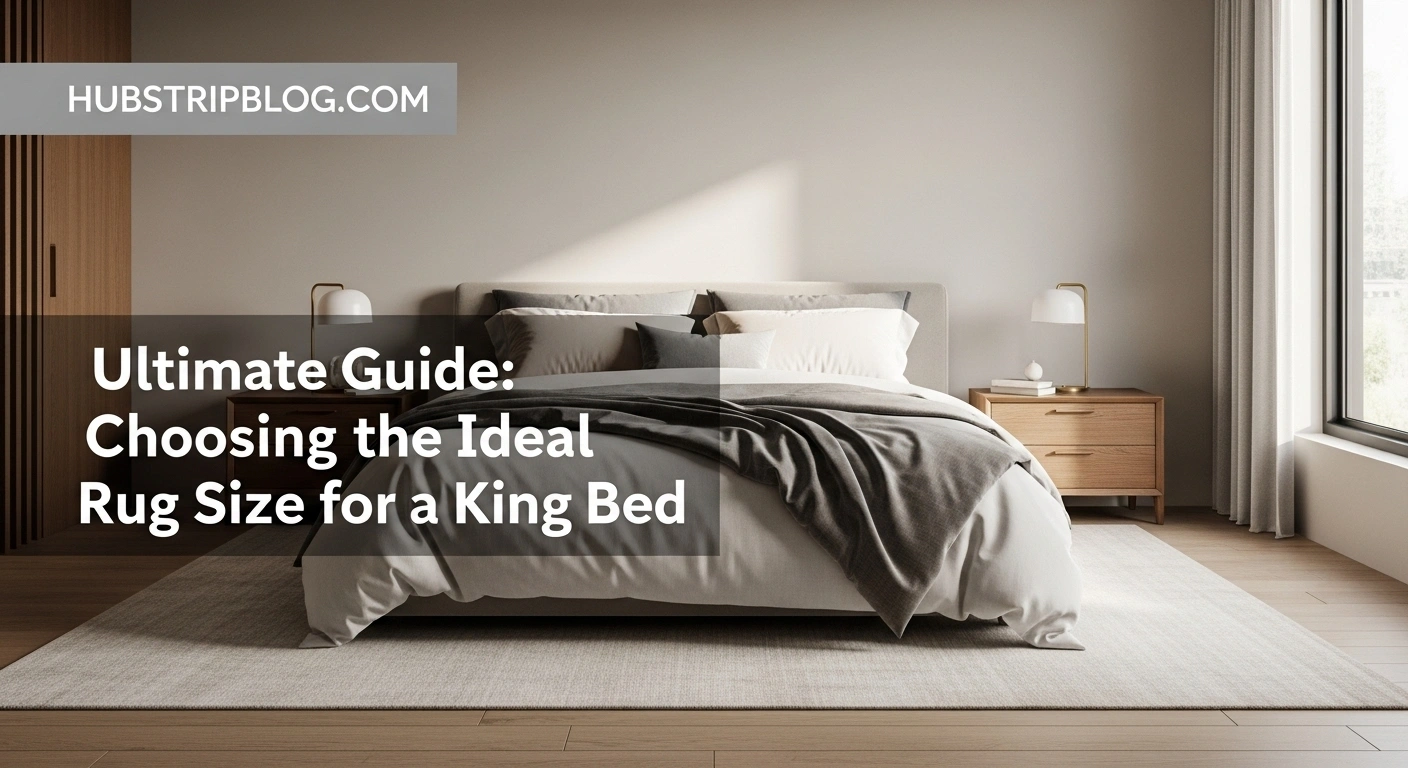
Why Rug Size Is the Foundation of Your Bedroom Design
Choosing the Ideal Rug Size for a King Bed – Before we dive into specific measurements and layouts, it’s essential to understand why rug size holds such significance, especially in a room dominated by a king bed. The right rug does far more than simply cover the floor; it’s a foundational element that influences the room’s entire atmosphere and functionality.
A properly sized rug acts as an anchor for your bed and accompanying furniture, like nightstands and benches. It creates a unified, designated “sleeping zone” that feels intentional and grounded. This visual anchor brings a sense of order and harmony to the space, preventing the furniture from feeling like it’s randomly placed. Ultimately, getting the size right is the most critical first step in any successful bedroom rug size guide for king bed. It sets the stage for comfort, balance, and sophisticated style.

Understanding the Canvas: King Bed and Room Dimensions
Before diving into patterns, textures, and rug styles, it’s crucial to start with the fundamentals—the dimensions of your bed and the room that frames it. Think of your bedroom as a canvas, and the rug as the grounding element that ties the entire composition together. Without understanding the proportions of that canvas, even the most luxurious rug can feel misplaced or overwhelm the space.
A king-size bed, while often treated as a single category, actually comes in several variations. The Standard King, sometimes called the Eastern King, measures approximately 76 inches wide by 80 inches long. This is the most common size found in modern bedrooms. Then there’s the California King, which trades a bit of width for extra length—typically 72 inches wide by 84 inches long—making it ideal for taller sleepers or rooms with a more elongated layout. Recognizing which version anchors your bedroom will immediately narrow your options when determining the correct rug dimensions.
Beyond the bed itself, the room’s overall size plays an equally critical role. A large master suite with open space on all sides of the bed can accommodate generous rug proportions—something that extends far beyond the bed frame, creating a sense of grounded luxury. In contrast, a smaller or asymmetrical room demands more precision. Here, the rug must be proportionate, enhancing flow without visually shrinking the available floor area.
When you take accurate measurements—of the bed, the bedside tables, and the clearances around them—you gain a true sense of scale. This step helps prevent a common design mistake: choosing a rug that’s either too small, leaving the bed looking unanchored, or too large, swallowing the surrounding furniture.
Understanding the interplay between bed size, room shape, and rug placement transforms rug shopping from guesswork into design strategy. It’s the difference between a space that merely looks arranged and one that feels intentionally composed—a room where proportions harmonize, creating visual calm and spatial balance.
The Standard (Eastern) King Bed
The Standard King—also known as the Eastern King—is the quintessential centerpiece of a modern master bedroom. It’s the bed that embodies balance: wide enough to provide generous personal space for two, yet compact enough to fit gracefully within most full-sized rooms. For couples, it represents both comfort and independence—a layout that allows each person to stretch, read, or rest without compromise.
Average Dimensions: approximately 76 inches wide by 80 inches long.
This bed’s proportions are distinctly horizontal, with a broad stance that commands presence without overwhelming the space. Its slightly shorter length compared to a California King makes it especially well-suited for square or nearly square bedrooms, where visual symmetry is key. The expansive width becomes the defining factor when determining the ideal rug size.
When styling around an Eastern King, the rug should extend generously on either side—typically at least 24 inches beyond the bed frame—to create a cohesive, grounded look. This not only provides a soft landing underfoot each morning but also balances the bed’s visual weight across the room. Rugs that are too narrow can make the bed appear disproportionate, while a well-scaled one establishes harmony between furniture and flooring.
Ultimately, the Standard King’s dimensions set the tone for the rest of the room’s composition. Its wide footprint invites thoughtful layering—bedside tables, lamps, and rugs all working together in rhythm. When executed well, it creates a space that feels both expansive and deeply personal—a true reflection of modern comfort and quiet luxury.
The California King Bed
The California King is a popular alternative, designed for those who need extra length. It’s slightly narrower but longer than a Standard King.
- Average Dimensions: 72 inches wide by 84 inches long.
This longer, leaner footprint makes it an ideal choice for narrower, longer master bedrooms. When choosing a rug for a Cal King, you’ll need to account for its length to ensure the rug extends properly beyond the foot of the bed.
The Crucial Role of Your Bedroom’s Dimensions
The bed is the star, but the room is the stage. The overall size and layout of your bedroom are just as important as the bed’s dimensions. A magnificent rug can lose all its impact if it’s poorly proportioned to the room.
The most important rule of thumb is to maintain a border of 18 to 24 inches of bare floor between the edges of the rug and the walls. This negative space is crucial; it frames the rug and prevents the room from feeling cramped or “carpeted wall-to-wall.” For a smaller master bedroom, you might lean closer to an 18-inch border, while a large, expansive room can easily accommodate a 24-inch border or more. Always measure your room’s length and width and subtract the desired border to find your maximum allowable rug size.
The Ultimate Bedroom Rug Size Guide for King Bed: Placement and Sizes
With your bed and room dimensions in hand, it’s time to explore the most popular and effective rug sizes and placement options. Each layout offers a distinct aesthetic and level of comfort. This section will serve as your core bedroom rug size guide for king bed, breaking down the best choices for creating a balanced and beautiful space.
We will cover everything from luxurious full-coverage options to practical and stylish partial-coverage layouts, ensuring you find the perfect fit for your style, budget, and room size.

The Maximalist Approach: The 12′ x 15′ Rug
For those with a spacious master bedroom who desire the utmost in luxury and comfort, the 12′ x 15′ rug is the ultimate choice. This generous size allows for a placement that exudes opulence and creates a fully unified sleeping area.
In this layout, the entire bed frame, both nightstands, and any bench at the foot of the bed rest completely on the rug. The rug should extend approximately 36 inches on either side of the bed and at least a foot beyond the foot of the bed. This creates an expansive, soft landing that greets your feet no matter where you get out of bed and makes the entire zone feel like a cohesive suite. This option is best for very large rooms where an 18-24 inch border of bare floor can still be maintained.
The Gold Standard: The 9′ x 12′ Rug
The 9′ x 12′ rug is widely considered the “gold standard” and the most recommended size for a king bed. It offers the perfect balance of coverage, style, and practicality, making it the most versatile and popular option you’ll find in any bedroom rug size guide for king bed.
This size provides a substantial, luxurious feel without requiring an exceptionally large room. The ideal placement for a 9′ x 12′ rug is to position it perpendicular to the bed, starting it just in front of the nightstands. Your nightstands will remain on the bare floor, which allows them to feel grounded and distinct. The rug will then extend about 2.5 feet (30 inches) on either side of the king bed and a generous amount past the foot of the bed, providing ample space for a bench while still showcasing the beautiful rug. This layout gives you a wonderfully soft surface to step onto in the morning and perfectly frames the bed.
The Smart Solution: The 8′ x 10′ Rug
If your master bedroom is on the cozier side, or if a 9′ x 12′ rug feels a bit too overpowering or pricey, the 8′ x 10′ rug is an excellent and highly effective alternative. It’s a smart, budget-friendly choice that still provides the anchoring and comfort benefits of a larger rug.
Similar to the 9′ x 12′ placement, you will position the 8′ x 10′ rug horizontally under the bed. The top edge of the rug should begin about a quarter of the way down from the headboard, typically in front of the nightstands. This placement ensures the rug extends approximately 18 to 24 inches on both sides of the king bed. While it provides less coverage at the foot of the bed compared to a 9′ x 12′, it still offers a soft landing area and effectively defines the sleeping space, making it a fantastic and proportionate choice for moderately sized rooms.
Advanced Bedroom Rug Strategies and Considerations
While the 9’x12′ and 8’x10′ sizes are the most common recommendations, interior design is about personal expression. There are several other creative and practical ways to incorporate a rug into your king bed setup. These alternative strategies can solve unique layout challenges, add a layer of design sophistication, or simply cater to a different aesthetic.
Furthermore, the right size is only part of the equation. The material, texture, and pile height of your rug are equally important factors that influence the room’s comfort, maintenance, and overall style.
Alternative Rug Placements
Don’t feel confined to the traditional “rug-under-the-bed” layout. Thinking outside the box can lead to a unique and highly functional design. These alternative placements work wonderfully and can be a focal point of your bedroom decor.
The Runner Solution: Flanking the Bed
One of the most popular and practical alternatives is to use two runners. Instead of one large rug underneath the bed, place a runner on each side. This approach has several advantages. It provides that essential soft and warm landing for your feet in the morning, and it’s often a more budget-friendly option than a single large area rug.
For a king bed, you’ll want runners that are appropriately scaled. Look for sizes like 2’6″ x 8′ or 3′ x 5′. The key is to ensure the runner is not wider than your nightstand and does not extend beyond the foot of the bed. This creates clean, parallel lines that can visually elongate the room. This solution is especially effective in smaller bedrooms where a large rug might feel overwhelming.
The Layered Look: Adding Depth and Texture
Layering rugs is a trend beloved by interior designers for its ability to add immense depth, texture, and personality to a space. This technique often involves using a large, neutral, and low-pile rug as a base and then layering a smaller, more decorative rug on top.
For a king bed, you could start with a large 10′ x 14′ jute or sisal rug to cover a large portion of the floor. Then, layer a smaller, plusher rug, perhaps a 6′ x 9′ vintage or patterned wool rug, placed partially under the bed in one of the standard layouts. This not only adds visual interest but also allows you to incorporate a more expensive or delicate rug without the high cost of a massive size.

Material, Pile, and Practicality
The tactile experience of your bedroom rug is just as important as its visual impact. The material and pile height you choose will directly affect the room’s comfort level and the amount of maintenance required.
- Wool: A classic and durable choice. Wool rugs are naturally soft, stain-resistant, and resilient, making them a fantastic long-term investment. They offer a luxurious feel underfoot.
- Synthetics (Nylon, Polypropylene): These man-made fibers are highly durable, easy to clean, and often more affordable. They are an excellent choice for households with pets or children, or for those prone to allergies.
- Natural Fibers (Jute, Sisal): These materials bring an organic, earthy texture to a room. They are incredibly durable but can be coarser underfoot. They are perfect as a base layer or for a more rustic, coastal aesthetic.
- Pile Height: This refers to the density and length of the rug’s fibers. A high pile (like a shag rug) is incredibly plush and cozy but can be harder to clean and may show footprints. A low pile rug is easier to vacuum, more durable in high-traffic areas, and allows doors to swing over it easily. For the area directly under the bed, a low to medium pile is often most practical.
Putting It All Together: A Step-by-Step Measurement Checklist
Feeling overwhelmed? Let’s simplify the process into a clear, actionable checklist. Following these steps will ensure you have all the information you need to confidently select the perfect rug.
- Measure Your Bed: Confirm if you have a Standard King (76″ x 80″) or a California King (72″ x 84″). Note the total width, including the frame.
- Measure Your Nightstands: Note the width and depth of your nightstands. This is crucial for deciding if the rug should go under them or start in front of them.
- Measure Your Room: Record the total length and width of your bedroom.
- Determine Your Border: Decide on your desired border of bare floor (typically 18-24 inches). Subtract this border from your room’s dimensions to find your maximum rug size. For example, in a 13′ x 15′ room, a 2-foot (24-inch) border means your maximum rug size would be 9′ x 11′.
- Use Painter’s Tape: This is a professional designer’s secret weapon. Use painter’s tape on the floor to outline the dimensions of the rug sizes you are considering (e.g., 8′ x 10′ and 9′ x 12′). This allows you to visualize exactly how much space the rug will occupy and how it will interact with your furniture. Live with the tape outline for a day or two to get a real feel for the scale before you buy.
Conclusion
Choosing the right rug for your king bed is one of the most impactful design decisions you can make for your personal sanctuary. It’s the element that ties everything together, providing a foundation of comfort, color, and texture. While the array of options may seem daunting, the process becomes simple when you focus on proportion and placement. The most reliable choices, the 9′ x 12′ and 8′ x 10′ rugs, offer beautiful and balanced solutions for the majority of master bedrooms.
By measuring your bed, your room, and using painter’s tape to visualize the final layout, you remove the guesswork and empower yourself to make a confident choice. Remember that this is more than just a floor covering; it’s an investment in the comfort and harmony of your most personal space. This bedroom rug size guide for king bed is designed to be your trusted resource, ensuring the rug you select not only fits perfectly but also completes your vision of a serene and stylish retreat.