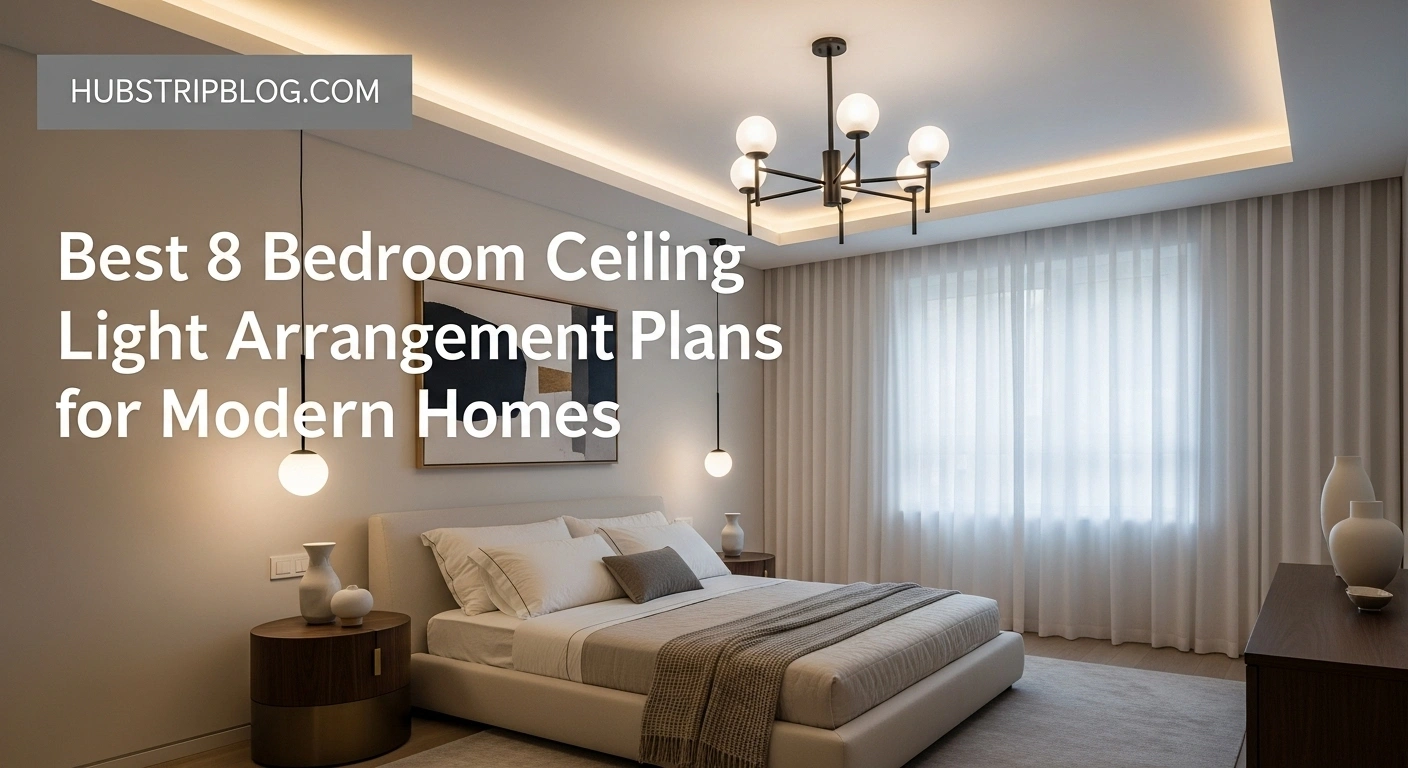
Understanding the Fundamentals of Brilliant Bedroom Lighting
Bedroom Ceiling Light Arrangement Plans – Before diving into specific layouts, it’s crucial to grasp the core concepts that underpin all successful lighting designs. The best bedroom ceiling light arrangement plans are not just about picking pretty fixtures; they are about strategically combining different types of light to create a cohesive, functional, and inviting environment. Neglecting these fundamentals is the most common reason a lighting scheme fails to meet expectations.
At the heart of any effective plan are the three layers of lighting: Ambient, Task, and Accent. Mastering how to blend these three layers is the secret to achieving a dynamic and versatile bedroom atmosphere.

The Three Layers of Lighting: The Cornerstone of Great Design
Think of these layers as the building blocks of your lighting Fplan. Each serves a distinct purpose, and together, they create a rich, multi-dimensional space.
- Ambient Lighting: This is the general, overall illumination of the room. It’s the foundation upon which other layers are built. Its purpose is to provide comfortable visibility for moving around the space safely. In bedrooms, ambient light is often provided by a central ceiling fixture, such as a flush mount, chandelier, or a grid of recessed lights.
- Task Lighting: As the name suggests, this layer is focused on illuminating specific activities. In a bedroom, common tasks include reading in bed, applying makeup at a vanity, or choosing clothes from a closet. Task lights are typically brighter and more directed than ambient lights. Examples include bedside table lamps, wall-mounted sconces, or a pendant light over a reading nook.
- Accent Lighting: This is the most decorative and dramatic layer. Its job is to highlight architectural features, artwork, or decorative objects. Accent lighting adds depth, contrast, and visual interest to a room. This can be achieved with a spotlight aimed at a painting, strip lighting inside a bookshelf, or an uplight behind a plant.
A successful bedroom lighting plan seamlessly integrates all three layers, allowing you to adjust the mood and functionality of the room with the flip of a switch.
Key Factors to Consider Before You Plan
Every bedroom is unique. The best bedroom ceiling light arrangement plans are those that are tailored to the specific characteristics of the space and its user. Before you choose a plan, carefully evaluate the following factors:
- Room Size and Ceiling Height: A small room with a low ceiling requires a different approach than a large, airy master suite with vaulted ceilings. The scale of your fixtures and the intensity of the light must be proportional to the space.
- Primary Functions of the Room: Is your bedroom strictly for sleeping? Or does it also serve as a home office, a reading retreat, or a dressing area? Identify all the activities that take place in the room to ensure you have adequate task lighting where you need it most.
- Architectural Features and Layout: Take note of features like alcoves, sloped ceilings, built-in wardrobes, or a designated seating area. These elements can present both challenges and opportunities for creative lighting solutions.
- Personal Style and Desired Ambiance: Are you aiming for a cozy, intimate feel or a bright, energizing atmosphere? Your aesthetic preference—be it minimalist, traditional, or bohemian—will heavily influence your choice of fixture styles and the overall lighting design.
- Existing Electrical Work: Consider the current location of junction boxes. While an electrician can move or add wiring, working with the existing layout can be more budget-friendly.
By taking a holistic view of your space and needs, you can select and adapt a lighting plan that truly enhances your bedroom.
The Core of Your Strategy: 8 Best Bedroom Ceiling Light Arrangement Plans
Now, let’s explore eight distinct, effective, and modern lighting arrangements. Each of these can be adapted to various room sizes and styles, serving as a blueprint for your own design. These are recognized as some of the best bedroom ceiling light arrangement plans by interior designers for their balance of form and function.
Plan 1: The Minimalist Centralist
This is a classic and straightforward approach, refined for modern aesthetics. It’s built around a single, powerful, and stylish central fixture that provides the primary ambient light.
- Best For: Small to medium-sized bedrooms, minimalist or Scandinavian decor.
- Key Fixtures: A large, modern semi-flush mount light or a simple, elegant drum pendant.
- How It Works: The central fixture anchors the room’s lighting. To prevent it from feeling flat, this ambient source is supplemented by task lighting, such as matching bedside table lamps or sleek, adjustable wall sconces for reading. The key is to choose a central fixture that makes a design statement without overwhelming the space.
- Pros: Cost-effective, easy to install (often uses existing wiring), creates a clean and uncluttered look.
- Cons: Can create shadows in the corners of larger rooms, may feel one-dimensional without proper task lighting.
Plan 2: The Layered Grid with Recessed Lights
For a clean, contemporary look with perfectly even illumination, a grid of recessed lights is an unparalleled choice. It’s one of the most versatile and best bedroom ceiling light arrangement plans for a seamless, modern feel.
- Best For: Larger bedrooms, rooms with lower ceilings, modern or ultra-minimalist homes.
- Key Fixtures: Multiple 4-inch or 6-inch recessed LED downlights (pot lights).
- How It Works: A pattern of 4 to 8 recessed lights is installed across the ceiling, providing a blanket of ambient light. They should be placed strategically—not in a simple grid, but to “wall wash” or illuminate key areas like walkways and closets. Crucially, this plan must be on a dimmer switch to control the intensity. Task lighting (bedside lamps) and accent lighting (an art spotlight) are still necessary to add character.
- Pros: Provides excellent, even light distribution; fixtures are unobtrusive and disappear into the ceiling; highly customizable with dimmers and adjustable “eyeball” trims.
- Cons: Requires more complex installation and wiring; can feel clinical or sterile if not paired with warmer task and accent lights; lacks a central decorative element.
Plan 3: The Statement Piece with Accent Support
This plan is all about drama and elegance. It starts with a bold, decorative centerpiece and builds the rest of the lighting around it.
- Best For: Master suites, bedrooms with high ceilings, eclectic, glamorous, or traditional decor.
- Key Fixtures: A stunning chandelier or a large-scale sculptural pendant.
- How It Works: The chandelier or pendant acts as the room’s focal point and primary ambient light source. This is then supported by a subtle grid of small, discreet recessed lights placed near the room’s perimeter. These recessed lights fill in any shadows cast by the central fixture and can be used as a lower-level ambient light when the drama of the chandelier isn’t needed. Bedside sconces or lamps complete the task layer.
- Pros: Creates an instant “wow” factor and a luxurious feel; provides excellent layered lighting options for different moods.
- Cons: A large statement fixture can be expensive; requires sufficient ceiling height to avoid looking cramped; the central piece can be difficult to clean.
Plan 4: The Symmetrical Bedside Pendant Layout
This modern and chic arrangement breaks from tradition by eliminating the central fixture altogether and focusing on the bed as the room’s focal point.
- Best For: Bedrooms of all sizes, contemporary and boutique hotel-inspired designs.
- Key Fixtures: Two matching pendant lights.
- How It Works: Instead of table lamps, a stylish pendant light is hung on each side of the bed, suspended from the ceiling. This provides excellent task lighting for reading and creates a strong, symmetrical visual anchor. Ambient light is then handled by recessed lights or a very low-profile flush mount placed off-center. This design frees up valuable space on your nightstands.
- Pros: Creates a high-end, custom look; saves nightstand space; provides effective and stylish task lighting.
- Cons: Requires dedicated wiring for each pendant; offers less overall ambient light, necessitating a good secondary ambient source.
Plan 5: The Cove and Perimeter Glow
For an ultra-modern, soft, and indirect illumination, cove lighting is an architectural solution that delivers breathtaking results. This is one of the more advanced but best bedroom ceiling light arrangement plans for creating a truly unique ambiance.
- Best For: Modern and futuristic homes, bedrooms where a relaxing, spa-like atmosphere is desired.
- Key Fixtures: LED strip lights.
- How It Works: A ledge or recess (the “cove”) is built around the perimeter of the room’s ceiling. LED strips are hidden inside this cove, casting a gentle, diffuse glow upwards and outwards across the ceiling. This provides beautiful ambient light with no visible source. This technique is almost always combined with recessed lights for general visibility and dedicated task lights for activities.
- Pros: Creates a stunning, high-end architectural effect; provides completely glare-free ambient light; perfect for setting a relaxing mood.
- Cons: Most complex and expensive to install, often requiring construction work; not sufficient as a sole light source.

Plan 6: The Track Lighting Multi-Tasker
Once relegated to galleries and kitchens, modern track lighting has become a sophisticated and incredibly flexible solution for multi-functional bedrooms.
- Best For: Loft-style bedrooms, rooms that double as a workspace, or for those who like to frequently rearrange furniture.
- Key Fixtures: Modern track or monorail system with multiple adjustable heads.
- How It Works: A track is installed on the ceiling, and several individual light heads can be positioned and aimed anywhere along it. This allows you to create a completely custom plan. You can point some heads at the walls for ambient light, aim one over a desk for task lighting, and focus another on a piece of art for accent lighting—all from a single fixture.
- Pros: Ultimate flexibility to change your lighting scheme at will; can provide all three layers of light from one installation; great for highlighting specific zones in a room.
- Cons: Can look industrial or cluttered if not chosen carefully; may not provide the soft, diffuse ambiance desired in a traditional bedroom.
Plan 7: The Low-Ceiling Solution
Bedrooms with low ceilings (typically under 8 feet) present a unique challenge. This plan focuses on creating a sense of height and space through clever fixture selection and placement.
- Best For: Basement bedrooms, older homes, rooms with ceilings under 8 feet.
- Key Fixtures: Ultra-slim flush mount lights, wall sconces.
- How It Works: The goal is to keep all fixtures close to the ceiling or on the walls. Replace any hanging lights with a sleek, powerful LED flush mount or a series of smaller “puck” lights. The real magic comes from using wall sconces that cast light both upwards and downwards. The uplighting effect makes the ceiling feel higher, while the downlighting provides useful illumination.
- Pros: Maximizes headroom and prevents the space from feeling cramped; creates a bright and open atmosphere.
- Cons: Limited in decorative options for hanging fixtures; requires careful placement of sconces to avoid glare.
Plan 8: The Grand Chandelier with Layered Ambiance
This plan is a more sophisticated and complete version of Plan 3, designed specifically for large master suites where luxury and functionality must coexist. It’s often considered the pinnacle of the best bedroom ceiling light arrangement plans for high-end homes.
- Best For: Very large master bedrooms (250 sq ft+), rooms with distinct seating areas, luxury and classic decor.
- Key Fixtures: A large chandelier, multiple recessed lights, wall sconces, and table lamps.
- How It Works: A grand chandelier is placed over the bed or the central point of the room. A separate zone of four recessed lights is installed over a seating area or reading nook. Wall sconces flank the headboard for task lighting, while table lamps on dressers or side tables add another layer of warm, low-level light. Each of these zones should be on a separate dimmer switch for ultimate control.
- Pros: Creates the most versatile and functional lighting environment; offers a multitude of moods and settings; exudes opulence and thoughtful design.
- Cons: Highest cost and most complex wiring; requires a large space to avoid looking cluttered.
Choosing the Right Fixtures and Technology for Your Plan
Selecting a plan is only half the battle. The fixtures and technology you choose will bring it to life. The modern homeowner has an incredible array of options that go far beyond the simple on/off switch.
A Guide to Modern Bedroom Ceiling Fixtures
Understanding the main categories of fixtures will help you populate your chosen plan effectively.
Recessed Lights (Downlights)
These are installed directly into the ceiling, with only the trim visible. They are the workhorses of modern ambient lighting. LED options are now standard, offering incredible energy efficiency, long life, and improved light quality. Look for “gimbal” or “eyeball” trims that allow you to direct the light.
Flush and Semi-Flush Mounts
These fixtures mount directly or with a short stem to the ceiling. Flush mounts are ideal for low ceilings, providing good ambient light without sacrificing headroom. Semi-flush mounts hang a few inches down, allowing light to shine both downwards and upwards, which can help illuminate the ceiling and make a room feel larger.
Chandeliers and Pendants
These are decorative fixtures that hang from the ceiling. A chandelier typically has multiple arms or light sources, making it a powerful statement piece. A pendant is a single light source suspended by a cord or rod. They are perfect for adding personality and can serve as either ambient or task lighting depending on their size and placement.
Track Lighting
This system involves a linear track that houses multiple, independently adjustable light heads. Modern systems are sleek and come in various finishes. Monorail systems offer more flexibility with curved tracks for a custom, sculptural look.

Embracing Smart Lighting: Dimmers and Color Temperature
Technology is a game-changer for bedroom lighting. Two features are non-negotiable for a modern, functional space.
- Dimmers: Every single light in your bedroom should be on a dimmer switch. This is the single most important and cost-effective upgrade you can make. It allows you to take any lighting plan and instantly adjust the intensity from bright and functional to soft and relaxing. It’s the key to creating mood.
- Tunable White (Color Temperature): Light isn’t just about brightness; it’s also about color. Measured in Kelvin (K), color temperature affects our mood and even our sleep cycle.
- Warm White (2700K – 3000K): This is a cozy, yellowish light, similar to a traditional incandescent bulb. It’s ideal for bedrooms as it promotes relaxation.
- Cool White (3500K – 4000K): This is a more neutral, white light that is good for alertness and focus. It can be useful for a reading nook or vanity area.
- Daylight (5000K+): This is a crisp, blue-ish light that mimics natural daylight. It is generally too harsh and stimulating for a bedroom’s primary lighting.
Smart LED bulbs and fixtures now allow you to change both the brightness and the color temperature from your phone or a smart switch. You can program scenes like “Wake Up” with a cool, gradually brightening light, and “Wind Down” with a very dim, warm glow, aligning your home’s lighting with your body’s natural circadian rhythm.
Common Pitfalls to Avoid in Your Lighting Arrangement
Even with the best intentions, some common mistakes can derail your lighting plan. Be mindful to avoid these:
- Relying on a Single Overhead Light: This is the cardinal sin of bedroom lighting. It creates harsh shadows and offers zero versatility. Always layer your lighting.
- Forgetting Dimmers: Bright light is great for cleaning, but terrible for relaxing. A dimmer is essential for every circuit.
- Choosing the Wrong Scale: A tiny pendant in a massive room looks lost, while an oversized chandelier in a small room is oppressive. Ensure your fixtures are proportional to your space.
- Poor Placement: Placing recessed lights directly over the bed can feel like an interrogation. Position them to wash walls or illuminate walkways instead. Ensure bedside task lights are positioned so they don’t create glare when you’re reading.
- Ignoring the Bulb: The fixture is just the housing. The bulb you choose determines the light quality. Pay attention to lumens (brightness) and Kelvin (color temperature) to get the effect you want.
Conclusion
Crafting the perfect lighting for your bedroom is a deliberate and rewarding process. It transcends mere decoration, fundamentally shaping the usability, comfort, and emotional resonance of your most personal space. By moving away from a single, utilitarian light source and embracing a layered approach, you unlock a world of possibility. The best bedroom ceiling light arrangement plans are not rigid formulas but flexible frameworks that combine ambient, task, and accent lighting to suit your unique needs and style.
Whether you opt for the clean simplicity of a recessed grid, the dramatic flair of a statement chandelier, or the sleek modernity of bedside pendants, the key is intentionality. Consider your room’s layout, your daily routines, and the atmosphere you wish to create. Invest in quality fixtures, and most importantly, put every light on a dimmer. By applying these principles, you can design a lighting scheme that is not just functional but truly transformative, ensuring your bedroom is the beautiful, restful sanctuary you deserve.