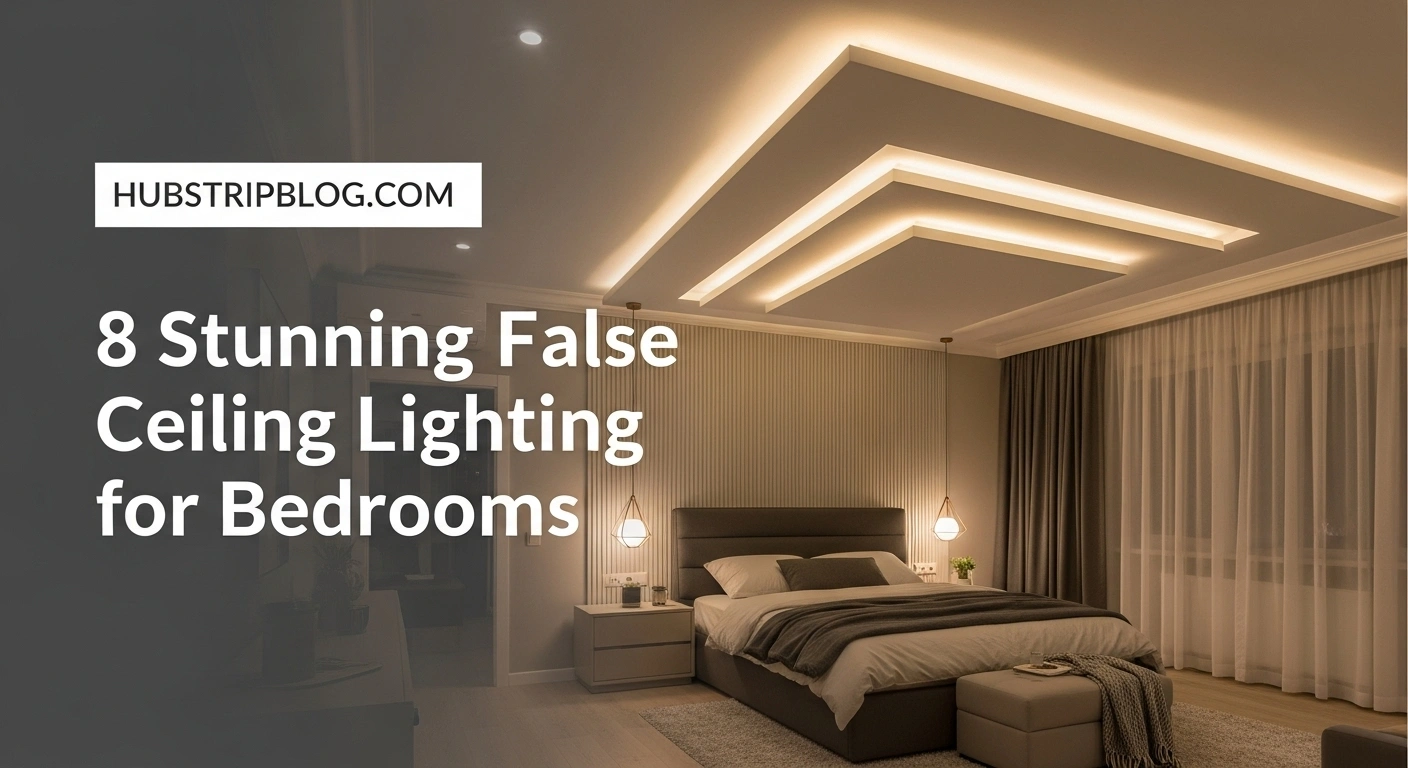
The Transformative Power of a False Ceiling in Bedroom Design
Stunning False Ceiling Lighting – A false ceiling, also known as a dropped ceiling or suspended ceiling, is a secondary ceiling built below the main structural ceiling. While its practical benefits are significant, its aesthetic potential is where it truly shines, especially concerning lighting design.
By installing a false ceiling, you are essentially giving yourself a blank slate. It allows for the seamless integration of various light fixtures without the need for messy surface-mounted wiring. This clean, built-in look is a hallmark of high-end interior design. Furthermore, the very structure of a false ceiling—the gaps, levels, and recesses—becomes part of the lighting design itself, shaping and directing light in unique and beautiful ways.

Understanding the Three Layers of Lighting
Before we dive into specific bedroom false ceiling lighting ideas, it’s crucial to understand the three fundamental types of lighting that work together to create a balanced and functional space. A well-designed false ceiling allows you to incorporate all three layers effortlessly.
Ambient Lighting: The Foundation
Every beautifully lit bedroom begins with one essential element — ambient lighting. Often referred to as general lighting, this is the foundational layer that sets the tone for the entire space. It’s the quiet hero of illumination — not flashy or attention-seeking, but absolutely vital. Ambient lighting ensures that your bedroom feels balanced, comfortable, and functional, allowing every other lighting layer — task, accent, and decorative — to shine in harmony.
In the context of a false ceiling, ambient lighting takes on an even more refined role. It can be achieved through a variety of methods, each with its own character and aesthetic appeal. Recessed lights, for instance, offer a clean, minimalist approach — their soft pools of light cast evenly across the room without cluttering the ceiling line. A central flush-mount fixture provides a more traditional focal point, spreading light broadly while keeping the ceiling visually open. Meanwhile, indirect cove lighting adds a modern, architectural dimension, washing the ceiling in a gentle, diffused glow that eliminates harsh shadows and creates a luxurious, hotel-like ambiance.
The goal of ambient lighting is balance, not spectacle. It should feel effortless — bright enough to move around comfortably, yet soft enough to maintain a relaxing atmosphere. Think of it as the natural daylight of your interior world: subtle, encompassing, and quietly beautiful. When designed thoughtfully, ambient lighting doesn’t just illuminate your bedroom; it defines its mood.
For best results, connect your ambient lighting to dimmers. This simple upgrade allows you to adjust intensity depending on the time of day or your emotional state — brighter for morning activity, softer for winding down at night. The ability to fine-tune brightness turns ordinary lighting into an emotional tool, shaping how the room feels at any given moment.
Ultimately, ambient lighting lays the groundwork for everything else. It’s the foundation upon which your lighting story is built — calm, balanced, and inviting. Without it, even the most beautiful chandeliers or pendant lights lose their context. With it, every other element in your design gains warmth, depth, and purpose.
Task Lighting: The Functional Focus
Task lighting is directed, focused light designed for specific activities. In a bedroom, this could be for reading in bed, applying makeup at a vanity, or choosing clothes from a wardrobe. A false ceiling is perfect for incorporating task lighting, such as adjustable recessed spotlights (gimbals) aimed at a reading chair or a series of downlights positioned directly above a closet area.
Accent Lighting: The Artistic Flair
Accent lighting is the most dramatic of the three. Its purpose is to draw attention to a specific feature in the room—a piece of art, a textured wall, or an architectural detail. It adds depth, contrast, and a sense of luxury. False ceilings can be designed to include narrow beams of light washing down a feature wall or backlighting a statement headboard, creating a truly cinematic effect.
8 Stunning Bedroom False Ceiling Lighting Ideas
Now, let’s explore eight stunning and practical bedroom false ceiling lighting ideas that leverage the power of a dropped ceiling to create a truly exceptional personal space.
1. The Timeless Elegance of Cove Lighting
Cove lighting is perhaps the most popular and beloved of all false ceiling lighting techniques. It involves placing light sources, typically LED strips, in a trough, ledge, or recess along the perimeter of the ceiling. The light is directed upwards or outwards, bouncing off the ceiling and walls to create a soft, even, and indirect glow.
This technique is perfect for bedrooms because it eliminates harsh shadows and direct glare, which can feel jarring in a space meant for relaxation. The gentle illumination creates a serene, hotel-like atmosphere that is instantly calming. It serves as an excellent source of ambient lighting and can be fully dimmable to transition from a bright, clean look to a subtle, moody glow.
Choosing the Right Color Temperature for Cove Lighting
The “color” of the white light, measured in Kelvin (K), dramatically affects the room’s mood. For bedroom cove lighting, a warm white light (2700K – 3000K) is highly recommended. This temperature mimics the warm, cozy glow of an incandescent bulb or candlelight, promoting relaxation and comfort. A cooler white (4000K and above) can feel more clinical and is better suited for kitchens or offices.
The Power of Dimmers for Ambiance Control
Installing a dimmer switch for your cove lighting is non-negotiable. It gives you complete control over the light intensity, allowing you to adapt the room’s ambiance to your mood or activity. Brighten it up when cleaning or organizing, and dim it down low for winding down before sleep or watching a movie. This simple addition elevates the functionality and luxury of the design immensely.
2. Modern Sophistication with Recessed Lighting
Recessed lights, also known as downlights or can lights, are fixtures installed directly into the false ceiling, so the bulb and housing are hidden from view. The result is a clean, minimalist, and modern aesthetic where the light appears to emanate directly from the ceiling itself.
While sometimes criticized for creating a generic “grid” look, when used thoughtfully, recessed lighting is one of the most versatile bedroom false ceiling lighting ideas. It can provide powerful ambient lighting when spaced correctly, or be used for precise task lighting and dramatic accent lighting.
Gimbal vs. Fixed Recessed Lights
Recessed lights come in two primary forms: fixed and adjustable. Fixed downlights cast their beam straight down, making them ideal for general ambient illumination. Gimbal or adjustable downlights have a pivoting head that allows you to direct the light beam. This makes them perfect for accent lighting, such as highlighting a piece of art on the wall or serving as a focused reading light aimed at a bedside table.
Strategic Placement for Maximum Impact
Avoid the “runway” look of placing recessed lights in a single straight line. Instead, think about the room’s function.
- Place a few over the main circulation path from the door to the closet.
- Position one or two directly over the wardrobe or closet area for clear task lighting.
- Use gimbals near the walls to create a “wall-washing” effect, which makes the room feel larger and more inviting.
- Consider placing them asymmetrically to create visual interest.
3. The Dreamy “Starry Night” Effect with Fiber Optics
For a truly magical and unique bedroom experience, consider a fiber optic star ceiling. This design uses hundreds of tiny fiber optic strands fed through small holes in a dark-painted false ceiling panel, typically placed over the bed. Each strand acts as a point of light, perfectly recreating the look of a clear, starry night sky.
This is the ultimate in mood lighting. It offers a very low level of light, perfect for falling asleep to, and creates an unparalleled sense of wonder and tranquility. Many fiber optic kits come with a “twinkle wheel” that causes the stars to shimmer gently, and some even offer features like shooting stars or customizable constellations. While it serves more of a decorative than functional purpose, its impact on the room’s atmosphere is profound.
4. The Floating Island Ceiling with Pendant Lights
This design combines multiple false ceiling techniques to create a stunning focal point, usually centered over the bed. It involves creating a lowered central “island” or rectangular section of the false ceiling that appears to float.
The magic happens with the lighting integration.
- Cove Lighting: The perimeter of the floating island is fitted with hidden cove lighting, which shines upwards and outwards, creating a beautiful halo effect and highlighting the floating design.
- Central Fixture: A statement piece, like a beautiful pendant light or a small, elegant chandelier, is hung from the center of the island. This adds a decorative element and provides more direct light to the area below.
- Recessed Lights: Sometimes, small recessed lights are also added to the island itself for additional focused downlighting.
This layered approach is one of the most sophisticated bedroom false ceiling lighting ideas, as it combines ambient (cove), task/accent (pendant), and general lighting in one cohesive and visually striking feature.

5. Dramatic Backlit Panels for an Artistic Touch
Transform your ceiling into a piece of art with backlit panels. This technique involves using a translucent material, such as acrylic, frosted glass, or stretched PVC fabric, as a section of the false ceiling and illuminating it from behind with LED strips or panels.
The result is a large, diffuse, and incredibly soft light source that feels like a natural skylight. This is an excellent way to provide a significant amount of shadow-free ambient lighting. The design possibilities are endless. You can use a simple, large rectangular panel for a modern look, or have patterns laser-cut into the material to create intricate designs that are revealed only when the light is on. This idea works particularly well in a false ceiling design that extends down the wall behind the bed, creating a seamless and breathtaking feature wall and headboard.
6. Geometric Intrigue with LED Strip Patterns
For those with a penchant for contemporary and ultra-modern design, using the structure of the false ceiling to create geometric patterns with light is a bold and exciting option. This goes beyond simple perimeter coves and integrates light directly into the visual lines of the ceiling design itself.
Imagine recesses in the shape of intersecting lines, squares-within-squares, or an abstract pattern, all fitted with flush-mounted LED strips and diffusers. The light itself becomes the decoration. This design philosophy creates a dynamic and energetic feel, perfect for a modern minimalist bedroom. Using RGB (Red, Green, Blue) LED strips can even allow you to change the color of the light to suit your mood, transforming the room from a calm white space to a vibrant, colorful lounge at the touch of a button.
7. The Subtle Glow of Peripheral or Skirting Lighting
This is a subtle yet highly effective variation of cove lighting. Instead of having the light shine upwards onto the ceiling, a peripheral lighting design directs the light downwards from the very edge where the false ceiling meets the wall. This is often achieved with a small L-shaped channel at the perimeter.
This technique is known as wall grazing or wall washing. It creates a beautiful, soft glow that runs down the walls, highlighting their texture, color, and any artwork. It’s an excellent way to make a smaller room feel wider and more spacious. It provides gentle ambient light without any fixtures being visible, contributing to a clean, uncluttered look. This is one of the most elegant and understated bedroom false ceiling lighting ideas for creating a sophisticated, high-end feel.
8. Layered Lighting for Ultimate Versatility
The ultimate goal of a great lighting plan is versatility. Our needs in the bedroom change throughout the day. You need bright, clear light for getting dressed, softer light for relaxing, and focused light for reading. The best false ceiling design is one that layers multiple lighting types, putting each on a separate switch or dimmer.
This “all-of-the-above” approach is the pinnacle of functional luxury.
- Scene 1 (General): Turn on the main recessed lights for bright, even, ambient illumination.
- Scene 2 (Relax): Turn off the recessed lights and use only the warm, dimmable cove lighting for a cozy, relaxing atmosphere.
- Scene 3 (Reading): Use the cove lighting at a low level, but turn on a targeted gimbal recessed light aimed at your book or an elegant bedside pendant light.
- Scene 4 (Dramatic): Turn off all other lights and use only the accent lighting that highlights a feature wall or piece of art.
By combining several of the ideas listed above—such as cove lighting for ambiance, recessed lights for function, and a pendant for style—you create a truly dynamic and personalized environment. This is the most comprehensive of all bedroom false ceiling lighting ideas because it empowers you to tailor the room’s mood perfectly to any moment.
Choosing the Right Technology: LED, Smart Lighting, and More
The fixture is just one part of the equation; the technology powering it is just as important. Modern advancements have made bedroom lighting more efficient, versatile, and convenient than ever before.
Why LEDs are the Undisputed King
For virtually every false ceiling application, Light Emitting Diodes (LEDs) are the superior choice.
- Energy Efficiency: LEDs use up to 80% less energy than traditional incandescent bulbs, saving you money on your electricity bill.
- Long Lifespan: An LED bulb can last for 25,000 hours or more, meaning you won’t have to worry about climbing up to change bulbs in your intricate false ceiling for years, or even decades.
- Low Heat Emission: Unlike older bulbs, LEDs produce very little heat, which is safer for installation within the enclosed spaces of a false ceiling.
- Design Flexibility: They come in a huge variety of forms, from traditional bulbs to flexible strips, making them perfect for creative designs like coves and geometric patterns.
- Color Options: LEDs are available in a wide spectrum of color temperatures and even in full RGB color-changing models.

Integrating Smart Lighting for Modern Convenience
Take your lighting design to the next level by incorporating smart lighting. Smart bulbs, smart switches, and smart LED strips can be controlled via a smartphone app or by voice commands through assistants like Amazon Alexa or Google Assistant.
This allows for incredible convenience and customization. You can:
- Schedule your lights to turn on gradually in the morning, simulating a sunrise for a more natural wake-up experience.
- Create and save “scenes” that activate a specific combination of lights and brightness levels with a single command (e.g., “Hey Google, set movie mode”).
- Control your lights remotely, ensuring you never leave them on by accident.
- Change colors on RGB-enabled strips to instantly change the vibe of your room.
Understanding Color Rendering Index (CRI)
One final, more technical consideration is the Color Rendering Index (CRI). This is a scale from 0 to 100 that measures how accurately a light source reveals the true colors of objects. Sunlight has a CRI of 100. For a bedroom, where you want your clothes, skin tones, and decor to look natural and vibrant, you should look for bulbs with a CRI of 90 or higher. A low-CRI light can make colors appear dull, washed out, or have an unnatural yellowish or greenish tint.
Conclusion
A false ceiling is far more than a structural addition; it is the ultimate canvas for creative expression through light. By moving beyond a single, central fixture, you can craft a layered, dynamic, and deeply personal atmosphere that caters to every mood and need. From the soft, indirect glow of cove lighting to the dramatic flair of a backlit panel, the right bedroom false ceiling lighting ideas can elevate your personal sanctuary from a simple room to a luxurious retreat.
By carefully considering the interplay of ambient, task, and accent lighting, and by leveraging modern technologies like dimmable LEDs and smart controls, you can design a space that is not only beautiful but also intuitively functional. Your bedroom should be the most comfortable room in your home, and with a thoughtfully designed ceiling, the perfect lighting is always just a switch—or a voice command—away.