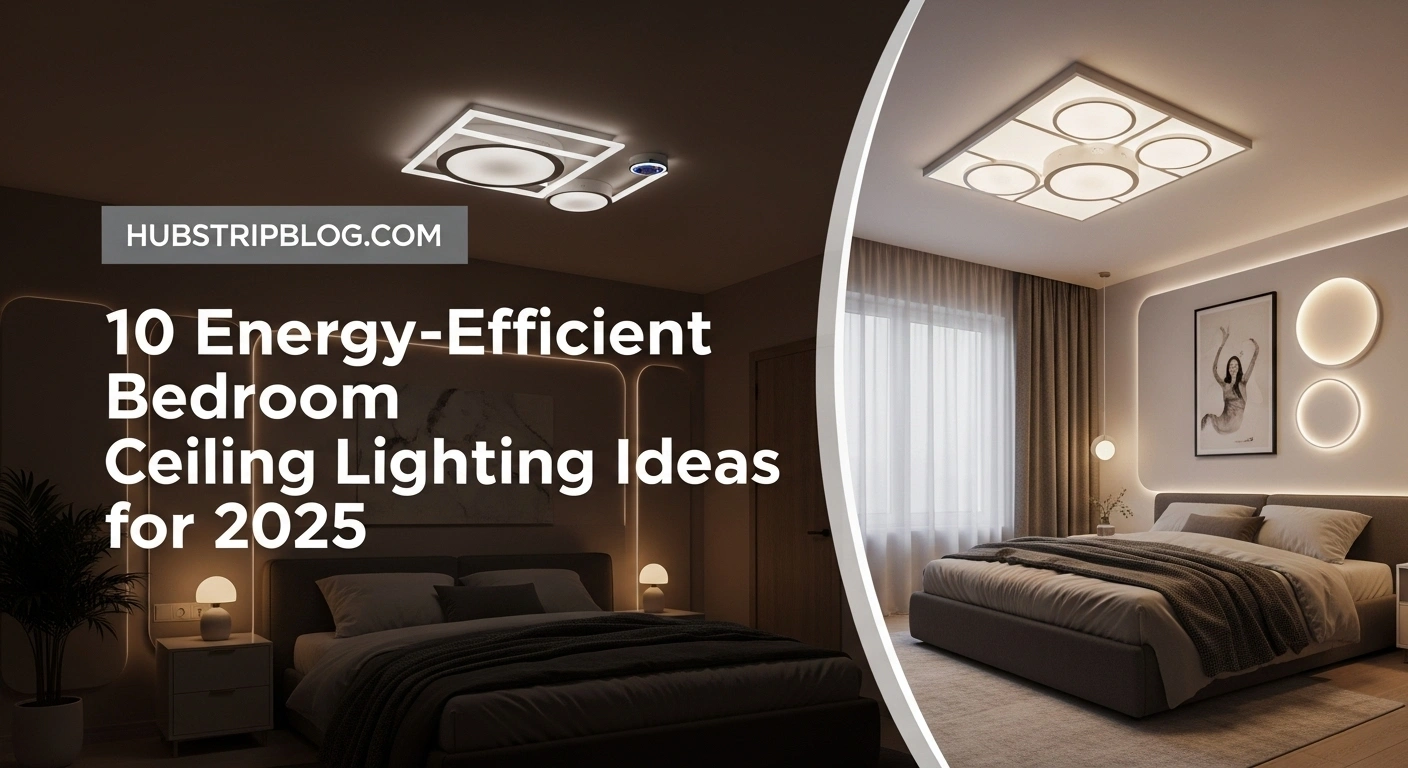
Why Energy-Efficient Lighting is Essential for the Modern Bedroom
Energy-Efficient Bedroom Ceiling Lighting – The shift toward energy-efficient lighting goes far beyond a desire to lower utility bills. It represents a fundamental change in how we approach home design, prioritizing long-term value, comfort, and environmental stewardship. For a space as intimate as the bedroom, these benefits are particularly impactful.
Modern energy-efficient technologies, primarily Light Emitting Diodes (LEDs), offer a significantly longer lifespan than their incandescent or halogen predecessors. This means fewer replacements, less waste in landfills, and less hassle for homeowners. Furthermore, they generate very little heat, contributing to a cooler, more comfortable room environment and reducing the strain on air conditioning systems during warmer months. This holistic approach to energy conservation is a cornerstone of contemporary home design.

Understanding the Core of Energy-Efficient Technology
Before diving into specific fixtures, it’s crucial to understand the technologies that make these energy-efficient bedroom ceiling lighting ideas possible. The innovation in this field has been rapid, offering homeowners unprecedented control over their lighting environment while consuming a fraction of the power.
The Unrivaled Dominance of LED Technology
At the heart of nearly every modern lighting solution is the LED. Unlike traditional bulbs that create light by heating a filament, LEDs produce light through a process called electroluminescence, which is vastly more efficient. This efficiency is measured in lumens per watt, and LEDs consistently outperform all other lighting types.
A standard LED bulb can be up to 80% more efficient than an incandescent bulb, producing the same amount of light (lumens) for far less energy (watts). They also boast an incredible lifespan, often lasting 25,000 to 50,000 hours or more. This longevity makes them a fit-and-forget solution, perfect for ceiling fixtures that can be cumbersome to access.
The Rise of Smart Lighting and IoT Integration
As we step further into the era of intelligent living, energy efficiency is no longer measured solely by how little electricity a bulb consumes — but by how intelligently the entire lighting ecosystem operates. In 2025, true efficiency is defined by integration, and nowhere is this more evident than in the seamless union between smart lighting and the Internet of Things (IoT).
Smart lighting systems have evolved into responsive networks that intuitively adapt to your habits, preferences, and environment. Through a smartphone app, voice command, or even automated schedules, you now hold full command over how and when your bedroom is illuminated. The result isn’t just convenience — it’s an entirely new relationship between you and your home’s energy flow.
Imagine this: as the evening sets in, your ceiling lights automatically dim to a soft, amber glow that signals your body to relax. Later, as you drift off to sleep, the system senses inactivity and turns off completely — no more wasted energy, no more forgotten switches. In the morning, the same system gently brightens the room with a crisp, daylight hue, simulating sunrise and aligning your internal clock with nature’s rhythm. It’s automation with intention, rooted in comfort, wellness, and sustainability.
These intelligent systems also integrate seamlessly with motion sensors, ambient light detectors, and smart thermostats, forming a web of communication that continuously fine-tunes your environment. If you enter your bedroom late at night, a subtle motion-activated glow may guide your way without the harshness of full illumination. During the day, built-in sensors can detect natural daylight and automatically reduce artificial brightness to save energy — without you ever needing to lift a finger.
The efficiency gains are profound. By ensuring that light is only consumed when and where it’s truly needed, IoT-integrated systems eliminate the silent waste that conventional setups overlook. Over time, this translates into lower energy bills, a smaller carbon footprint, and a more sustainable lifestyle that doesn’t compromise on luxury or comfort.
But beyond practicality, smart integration represents a philosophical shift in how we perceive lighting. No longer a static utility, light becomes a dynamic, intelligent companion — capable of learning from your behavior and adapting to your mood. It responds, evolves, and enhances daily life in ways that were once the stuff of science fiction.
From Google Home and Amazon Alexa to Apple HomeKit and beyond, compatibility has become effortless, allowing your ceiling lights, wall sconces, and even hidden cove LEDs to operate as one harmonious system. The future of bedroom lighting isn’t just efficient — it’s aware.
In essence, IoT-enabled lighting is not merely about saving energy; it’s about living intelligently. It represents a perfect balance of technology, design, and sustainability, offering both environmental responsibility and the unmatched comfort of personalized illumination.
When your home understands your rhythm and responds before you even reach for a switch, that’s not just innovation — it’s evolution by light.
The Importance of Dimmers and Color Temperature Control
Control is synonymous with efficiency. Dimmer switches are a simple yet powerful tool for energy conservation. When you dim an LED light, you are directly reducing its power consumption, which not only saves energy but also extends the bulb’s already long lifespan.
Beyond brightness, the ability to control color temperature (measured in Kelvin) is a game-changer for bedrooms. This feature, often called “tunable white,” allows you to shift the light from a cool, energizing blue-white (around 5000K) for waking up in the morning to a warm, relaxing amber glow (around 2700K) to help you wind down at night. This practice, known as human-centric lighting, supports your natural circadian rhythm, improving sleep quality and overall well-being.
10 Future-Forward Energy-Efficient Bedroom Ceiling Lighting Ideas
With a solid understanding of the technology, let’s explore the specific fixtures and concepts that are setting the trend for 2025. These ideas expertly blend cutting-edge efficiency with diverse aesthetic appeal, offering a perfect solution for every style of bedroom.
1. Smart Recessed LED Downlights: The Seamless Solution
Recessed lighting, or downlights, offers a clean, minimalist aesthetic by embedding the fixture directly into the ceiling. For years, they were notorious for energy waste and heat generation, but modern LED recessed lights have completely rewritten the script. They are now an exemplary model of an energy-efficient ceiling lighting idea.
These fixtures provide excellent ambient or general lighting, casting a wide, even glow across the room. When equipped with smart technology, their potential is fully unlocked. You can group lights into zones, dim them to the perfect level for reading or relaxing, and tune the color temperature to match the time of day—all from your smartphone. For a truly seamless look, opt for “gimbal” models that allow you to pivot the light source to highlight artwork or a reading nook.
2. Minimalist LED Flush Mount Fixtures: Sleek and Unobtrusive
For bedrooms with lower ceilings, flush mount fixtures are the ideal choice. They sit directly against the ceiling, maximizing headroom while providing ample illumination. The designs for 2025 are moving away from dated, dome-shaped glass towards ultra-slim, minimalist profiles that almost disappear into the ceiling plane.
These fixtures often feature an integrated LED array, meaning there are no bulbs to replace. The entire unit is a single, long-lasting light source. They come in a variety of shapes—round, square, and even abstract geometric forms—and can feature metallic finishes like brushed brass or matte black to complement modern decor. A dimmable LED flush mount is a workhorse, providing bright, even light when needed and a soft, ambient glow when it’s time to unwind.
3. Statement LED Pendant Lights: A Touch of Personality
Ceiling lighting doesn’t have to be invisible. A strategically placed pendant light can serve as a stunning focal point, much like a piece of jewelry for the room. Modern LED pendant lights come in an endless array of styles, from single, delicate globes flanking a bed to a sculptural cluster over a seating area.
The key to their efficiency lies in dedicated LED sources that are designed specifically for the fixture, ensuring optimal performance and light distribution. When choosing a pendant, consider it as a form of task or accent lighting. A pendant with a focused downlight is perfect for a bedside table, while one that casts a diffused, ambient light can add a layer of warmth to the entire room. This is one of the most stylish energy-efficient bedroom ceiling lighting ideas available.

4. Modern LED Ceiling Fans with Integrated Light: Form Meets Function
The ceiling fan is a bedroom staple, providing essential air circulation for a comfortable night’s sleep. Today’s models have evolved far beyond the clunky designs of the past, offering sleek, aerodynamic blades and, most importantly, highly efficient integrated LED light kits.
These dual-purpose fixtures are energy-savers on two fronts. The DC motor in modern fans consumes up to 70% less energy than older AC motor models. Paired with a dimmable, long-lasting LED light, a ceiling fan becomes a powerhouse of bedroom efficiency. Look for models with smart features that allow you to control both the fan speed and the light from a single remote or app.
5. Architectural Cove Lighting: The Hidden Glow
For a truly luxurious and contemporary feel, cove lighting is unmatched. This indirect lighting technique involves placing LED strip lights in a ledge, recess, or high on the wall, bouncing light up towards the ceiling. The result is a soft, diffuse glow that seems to emanate from the architecture itself, creating a serene and hotel-like ambiance.
LED strips are incredibly energy-efficient and offer remarkable versatility. RGBW strips allow you to change the color of the light to suit any mood, from a calming blue to a warm, candle-like orange. When used as the primary source of ambient light, cove lighting eliminates harsh shadows and creates a visually larger, more open space. It is a sophisticated approach to energy-efficient bedroom lighting.
6. Adjustable LED Track Lighting: Precision and Versatility
Track lighting has shed its commercial reputation and is now a chic, adaptable solution for the modern bedroom. Instead of a single, fixed light source, a track system allows you to position multiple “heads” anywhere along the track, directing light precisely where you need it.
This inherent flexibility is a form of efficiency; you are only illuminating the areas that require it. Use it to highlight a gallery wall, wash a closet with light, or focus a beam on a reading chair. Modern LED track heads are small, stylish, and incredibly powerful for their size. Systems with individually dimmable heads offer the ultimate in customized control, making this one of the most practical energy-efficient bedroom ceiling lighting ideas.
7. The Dimmable LED Chandelier: Sustainable Elegance
Chandeliers bring a sense of grandeur and timeless elegance to a bedroom, but traditional versions with dozens of incandescent candelabra bulbs were an energy nightmare. The modern LED chandelier reimagines this classic fixture for the 21st century, combining breathtaking design with sustainable technology.
These fixtures either use highly efficient LED-based candelabra bulbs or feature fully integrated LED elements that are part of the artistic design itself. From minimalist sputnik styles to crystal-adorned masterpieces, there is an energy-efficient chandelier for every aesthetic. Paired with a dimmer, a chandelier can provide brilliant room-filling light or a subtle, romantic shimmer.
8. Human-Centric LED Sky Panels: Bringing the Outdoors In
One of the most exciting innovations in lighting is the development of human-centric systems designed to mimic natural daylight. LED sky panels are flat fixtures that use advanced diffusion and color-tuning technology to create a remarkably realistic illusion of a skylight.
Throughout the day, the panel can automatically adjust its color temperature and intensity to match the sun’s natural cycle—cool and bright at midday, warm and soft in the evening. This helps regulate the body’s internal clock, promoting alertness during the day and better sleep at night. While a significant investment, these panels represent the pinnacle of well-being-focused, energy-efficient ceiling lighting design.
9. Layered Lighting Systems: The Holistic Approach
Perhaps the most effective idea is not a single fixture but a comprehensive strategy. Layered lighting involves using multiple light sources to create a balanced, functional, and visually appealing environment. The ceiling fixture provides the foundation of ambient light.
This foundational layer is then supplemented by task lighting (like a bedside lamp or a pendant) and accent lighting (like a track light on artwork). By having dedicated lights for specific purposes, you avoid having to blast the entire room with a single, overly bright ceiling light for every activity. Using low-wattage LEDs for each layer ensures the entire system is exceptionally efficient and allows you to craft the perfect mood for any occasion.
10. Voice-Activated Smart Lighting Ecosystems: Ultimate Convenience
The final idea is the culmination of all the technologies discussed: a fully integrated, voice-activated ecosystem. By connecting your smart LED fixtures—be they recessed lights, a ceiling fan, or cove lighting—to a central hub like Amazon Alexa, Google Assistant, or Apple HomeKit, you gain effortless control.
Simply saying “Good morning” could trigger a routine that slowly brightens your lights to a cool white, while “Good night” could dim them to a warm glow and turn them off after 15 minutes. This hands-free convenience does more than just feel futuristic; it reinforces energy-saving habits by making it incredibly easy to turn off lights you’re not using.
How to Choose the Right Fixture for Your Bedroom
Selecting from these fantastic energy-efficient bedroom ceiling lighting ideas requires careful consideration of your specific space and needs. Keep the following factors in mind to make the perfect choice.
Evaluate Bedroom Size and Ceiling Height
The scale of the fixture should match the scale of the room. A large, dramatic chandelier might overwhelm a small bedroom, while a tiny flush mount could get lost in a room with high, vaulted ceilings.
- Low Ceilings (under 9 feet): Stick with flush mounts, semi-flush mounts, or recessed lighting to preserve headroom.
- Standard Ceilings (9-10 feet): You have the most flexibility. Pendants, track lighting, and ceiling fans all work well.
- High Ceilings (over 10 feet): A chandelier or a long pendant light can help fill the vertical space and make the room feel cozier.

Define Your Desired Mood and Ambiance
Think about how you want your bedroom to feel. Do you crave a bright, airy, and energizing space or a cozy, intimate, and moody retreat?
- For a Cozy Ambiance: Opt for fixtures that provide diffused, indirect light, such as cove lighting or flush mounts with frosted diffusers. Always choose bulbs or fixtures that are “warm white” (2700K-3000K) and ensure they are dimmable.
- For a Brighter, Modern Feel: Recessed lighting or track lighting can provide crisp, clean illumination. Look for tunable white options that allow you to switch to a cooler “daylight” temperature (4000K-5000K) when you need to feel alert.
Commit to a Layered Lighting Plan
Don’t rely on a single ceiling fixture to do everything. A good lighting plan incorporates three layers:
- Ambient: The general, overall light provided by your main ceiling fixture (e.g., flush mount, recessed lights).
- Task: Focused light for specific activities (e.g., a pendant for reading, track lighting on a desk).
- Accent: Light used to highlight architectural features or decor (e.g., cove lighting, a gimbal recessed light aimed at a piece of art).
By planning for all three, you create a dynamic and highly functional space while using energy more efficiently.
Conclusion: Illuminating Your Future with Smart Choices
The future of the bedroom is a harmonious blend of comfort, style, and sustainability. The lighting we choose is no longer an afterthought but a central element in crafting a personal sanctuary that nurtures our well-being and respects our planet. As we look to 2025, the advancements in LED technology, smart controls, and human-centric design have given us an incredible array of options.
By embracing these energy-efficient bedroom ceiling lighting ideas, you can transform your space into a smarter, more beautiful, and more responsible retreat. From the seamless integration of recessed LEDs to the elegant statement of a modern chandelier, these solutions prove that an efficient home is a luxurious one. Making a conscious choice in your lighting is an investment that pays dividends in lower energy bills, enhanced comfort, and the simple joy of a perfectly illuminated room.